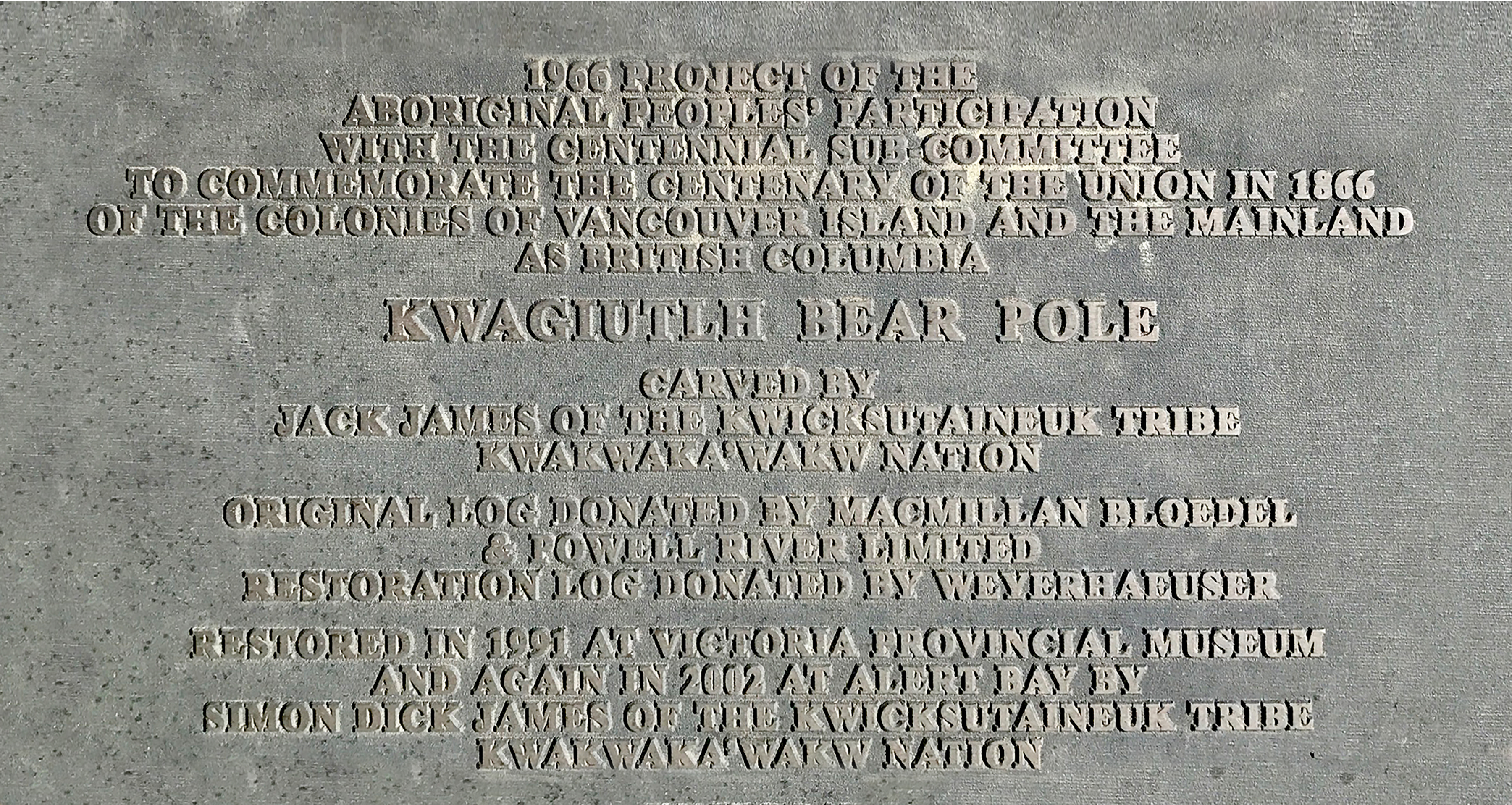
In 1964, Jack James, originally from Wakeman Sound and Gilford Village was commissioned to create a centennial pole for Parksville. The pole was located in the Community Park until 2001 when it was restored by Simon Silas James, stepson of Jack James.
Following restoration, the pole was moved to its new home at the Parksville and District Chamber of Commerce where it continued to deteriorate as occurs in natural settings. In 2017, the pole had deteriorated once again; the interior was a habitat for insects and woodpeckers, the paint faded and chipped and sections of the figures were crumbling as the pole followed its natural lifecycle.
Restoration Totem poles in their natural settings are not intended to be preserved for longevity. The Kwakwakawak people allowed the natural progression of decline and decay to take its course, reflecting the life processes around the pole. Over the years, paint fades and vanishes, and birds and insects make their homes in the temporary habitat, furthering its evolution back to the forest bed.
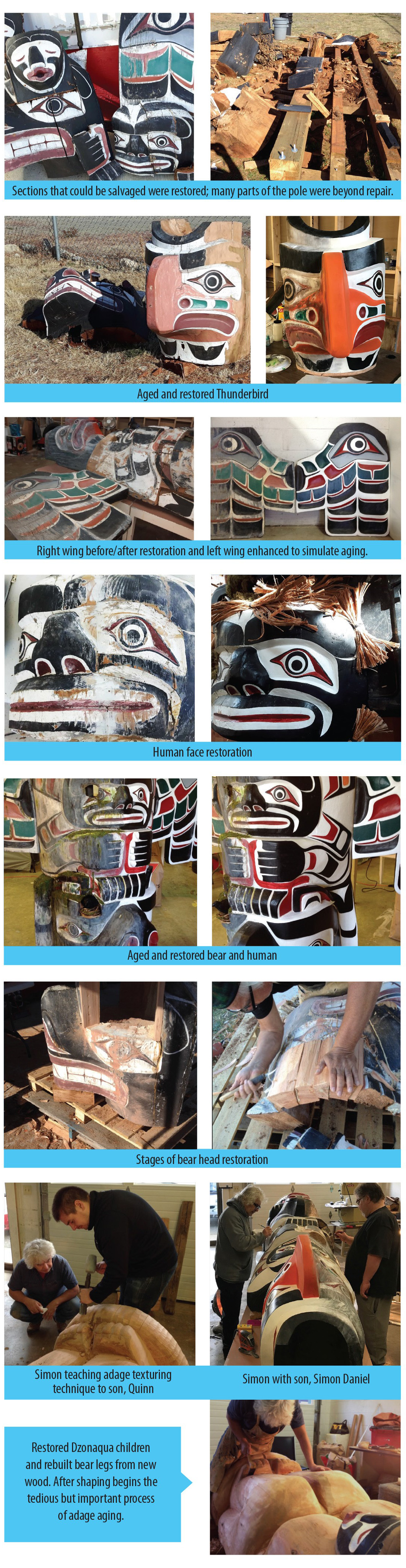
To recognize Canada’s 150th Sesquicentennial in 2017, the City of Parksville commissioned Simon Silas James to restore salvageable sections and create a lifecycle pole. Simon was inspired to approach the pole’s future in a unique way to honour both the lifecycle and the restoration process. He pondered the wealth of poles in major British Columbia museums and considered that in modern times, few people witness the evolution of a pole through its intended lifecycle. Authentic poles have been moved from their natural settings and relocated for preservation and display indoors. Poles have also been commissioned for museums or other public areas where they are maintained in a somewhat artificial state.
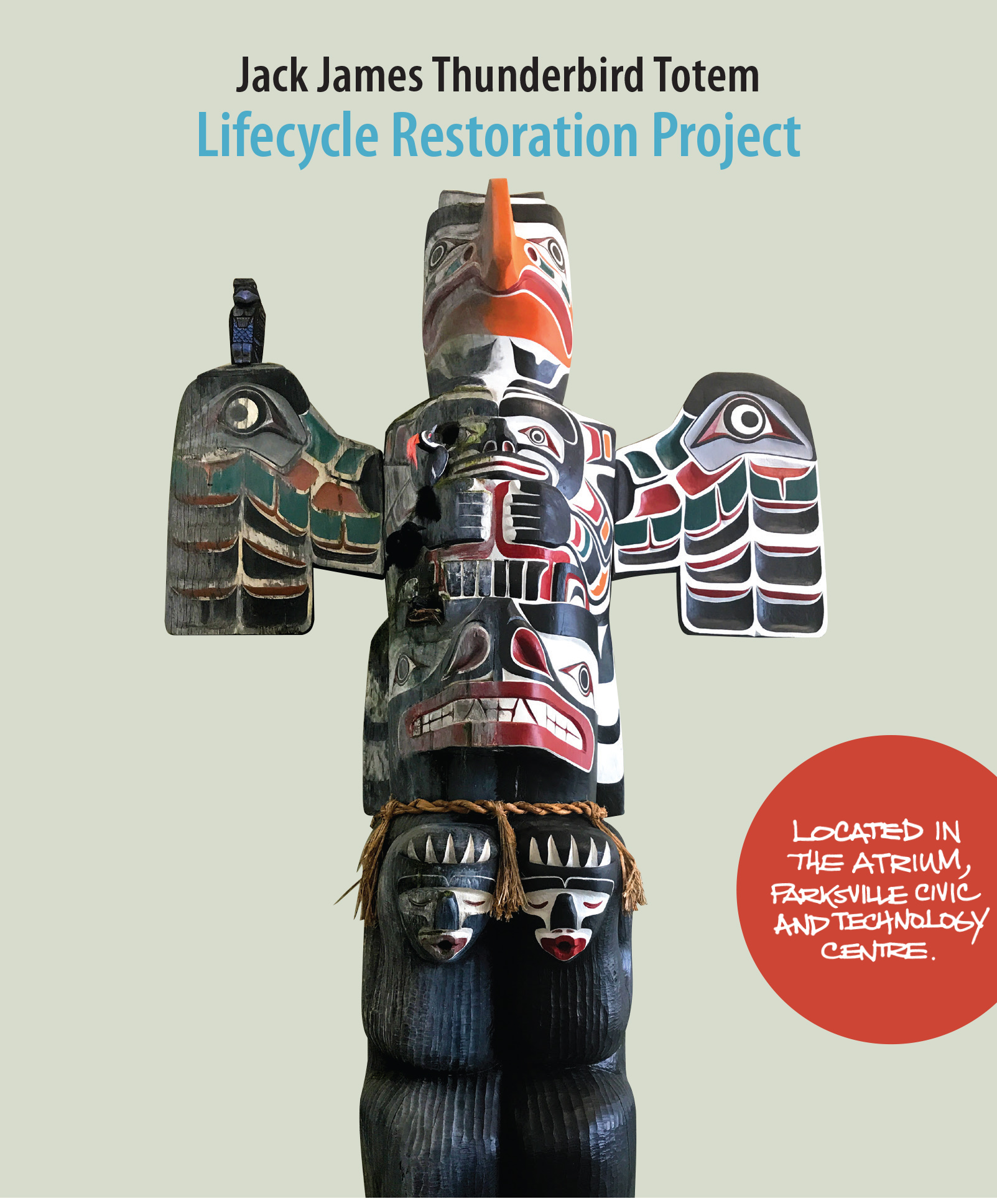
Completed in 2018, the Jack James Thunderbird totem pole was restored to show the natural progression from a new pole and then as it returns to the earth. The left side of the pole has been intentionally aged to show what would be a natural evolution resulting from weather and decay.
In 1964, Jack James, originally from Wakeman Sound and Gilford Village was commissioned to create a centennial pole for Parksville. The pole was located in the Community Park until 2001 when it was restored by Simon Silas James, stepson of Jack James.
Following restoration, the pole was moved to its new home at the Parksville and District Chamber of Commerce where it continued to deteriorate as occurs in natural settings. In 2017, the pole had deteriorated once again; the interior was a habitat for insects and woodpeckers, the paint faded and chipped and sections of the figures were crumbling as the pole followed its natural lifecycle.
Restoration Totem poles in their natural settings are not intended to be preserved for longevity. The Kwakwakawak people allowed the natural progression of decline and decay to take its course, reflecting the life processes around the pole. Over the years, paint fades and vanishes, and birds and insects make their homes in the temporary habitat, furthering its evolution back to the forest bed.
To recognize Canada’s 150th Sesquicentennial in 2017, the City of Parksville commissioned Simon Silas James to restore salvageable sections and create a lifecycle pole. Simon was inspired to approach the pole’s future in a unique way to honour both the lifecycle and the restoration process. He pondered the wealth of poles in major British Columbia museums and considered that in modern times, few people witness the evolution of a pole through its intended lifecycle. Authentic poles have been moved from their natural settings and relocated for preservation and display indoors. Poles have also been commissioned for museums or other public areas where they are maintained in a somewhat artificial state.
Completed in 2018, the Jack James Thunderbird totem pole was restored to show the natural progression from a new pole and then as it returns to the earth. The left side of the pole has been intentionally aged to show what would be a natural evolution resulting from weather and decay.